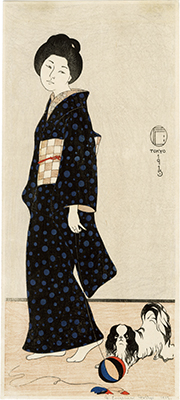
Fritz Capelari was an Austrian-born print artist who played a decisive role in triggering the birth of the shin-hanga movement during the Taisho period.
He came to Japan in 1911 and, in 1915, had a fateful encounter with the ukiyo-e publisher Shozaburo Watanabe. At a time when ukiyo-e was in decline, Watanabe was searching for a new form of woodblock print that could resonate with the modern age. He recognized this potential in the compositions and use of color found in Capelari’s watercolors. Based on Capelari’s designs, Watanabe employed the skills of traditional Japanese carvers and printers to produce works such as Woman in the Snow and Woman in a Long Undergarment. This collaboration, realized in 1915, marked the historic beginning of shin-hanga, paving the way for the later achievements of artists such as Ito Shinsui and Kawase Hasui.
Capelari’s style is characterized by a lyrical, subtly melancholic expression born from the fusion of Western modern sensibilities with traditional Japanese techniques.
He came to Japan in 1911 and, in 1915, had a fateful encounter with the ukiyo-e publisher Shozaburo Watanabe. At a time when ukiyo-e was in decline, Watanabe was searching for a new form of woodblock print that could resonate with the modern age. He recognized this potential in the compositions and use of color found in Capelari’s watercolors. Based on Capelari’s designs, Watanabe employed the skills of traditional Japanese carvers and printers to produce works such as Woman in the Snow and Woman in a Long Undergarment. This collaboration, realized in 1915, marked the historic beginning of shin-hanga, paving the way for the later achievements of artists such as Ito Shinsui and Kawase Hasui.
Capelari’s style is characterized by a lyrical, subtly melancholic expression born from the fusion of Western modern sensibilities with traditional Japanese techniques.