Shoun was an ukiyo-e artist active from the Meiji period through the Taisho era and into the early Showa years, known for fusing the traditions of ukiyo-e with a distinctly modern lyric sensibility.
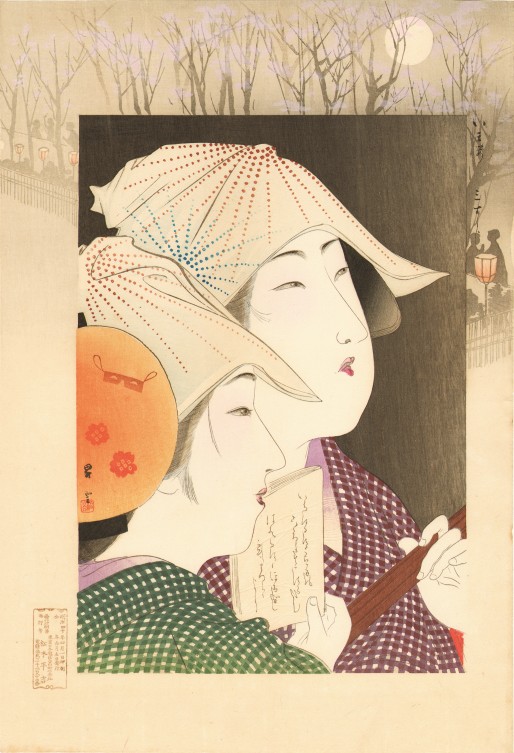
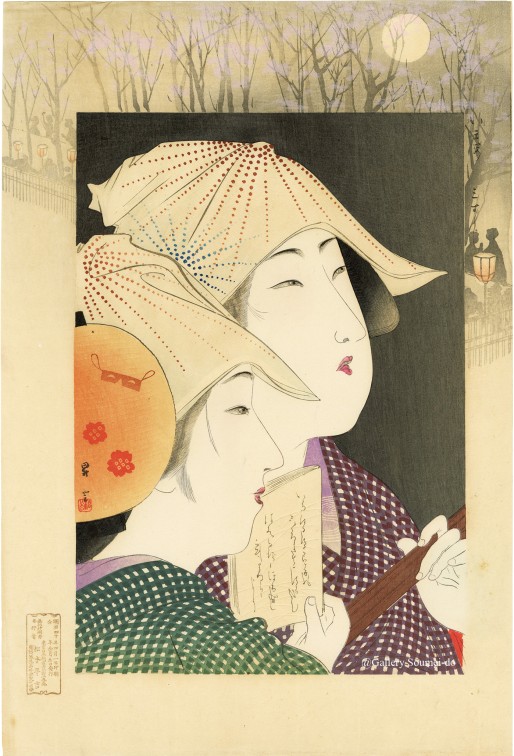
The most highly acclaimed achievement of Shoun’s career is the Lady in Modern Style, first published in 1906. This series captures the everyday lives and fashions of women living in Tokyo at the time with remarkable delicacy and elegance. While his figures retain the formal beauty of traditional ukiyo-e, their facial features and expressions are imbued with the realism characteristic of the Meiji period. In their gaze lingers a sense of “modern melancholy,” suggesting an inner life and individual emotion. Lady in Modern Style also represents the pinnacle of carving and printing techniques: every detail—from the intricate patterns of kimono, to the texture of skin, to individual strands of hair—is rendered with a level of refinement that can be considered the zenith of woodblock printing.
Whereas Kiyokata sought to idealize “women within a narrative,” Shoun aimed instead to fix on paper the very breath and presence of “women passing before one’s eyes in the present moment.” His works stand as the final dazzling flourish of the woodblock tradition that began in Edo, infused with both a deep affection for a vanishing age and the luminous promise of a new one.
The most highly acclaimed achievement of Shoun’s career is the Lady in Modern Style, first published in 1906. This series captures the everyday lives and fashions of women living in Tokyo at the time with remarkable delicacy and elegance. While his figures retain the formal beauty of traditional ukiyo-e, their facial features and expressions are imbued with the realism characteristic of the Meiji period. In their gaze lingers a sense of “modern melancholy,” suggesting an inner life and individual emotion. Lady in Modern Style also represents the pinnacle of carving and printing techniques: every detail—from the intricate patterns of kimono, to the texture of skin, to individual strands of hair—is rendered with a level of refinement that can be considered the zenith of woodblock printing.
Whereas Kiyokata sought to idealize “women within a narrative,” Shoun aimed instead to fix on paper the very breath and presence of “women passing before one’s eyes in the present moment.” His works stand as the final dazzling flourish of the woodblock tradition that began in Edo, infused with both a deep affection for a vanishing age and the luminous promise of a new one.