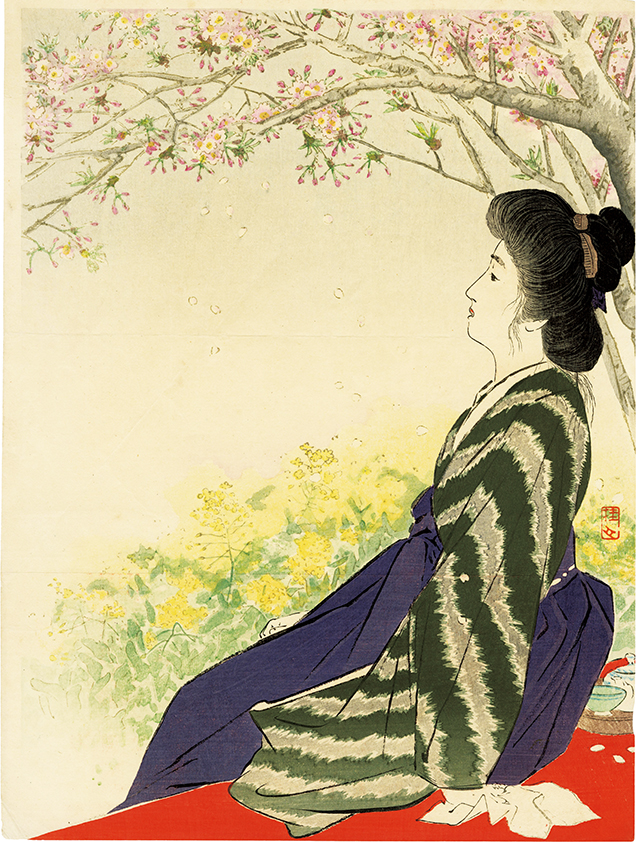
Keishu was an artist active from the Meiji period through the early Showa era (from the 1880s to the 1940s), and is best known as a leading master of kuchi-e frontispiece illustrations.
Keishu’s greatest achievement lies in the large number of lyrical and delicately rendered beauty, he produced for magazines such as Bungei Kurabu. His work is characterized by a gentle, refined use of color that is distinctly his own. The women he depicted combine traditional virtues with a sense of modern intelligence, earning him immense popularity among contemporary readers.
Rather than being merely a successor to ukiyo-e traditions, Keishu successfully adapted to the era of new printing technologies—including lithography and woodblock-printed kuchi-e—and elevated popular magazine illustration to the level of a recognized art form.
Keishu’s greatest achievement lies in the large number of lyrical and delicately rendered beauty, he produced for magazines such as Bungei Kurabu. His work is characterized by a gentle, refined use of color that is distinctly his own. The women he depicted combine traditional virtues with a sense of modern intelligence, earning him immense popularity among contemporary readers.
Rather than being merely a successor to ukiyo-e traditions, Keishu successfully adapted to the era of new printing technologies—including lithography and woodblock-printed kuchi-e—and elevated popular magazine illustration to the level of a recognized art form.