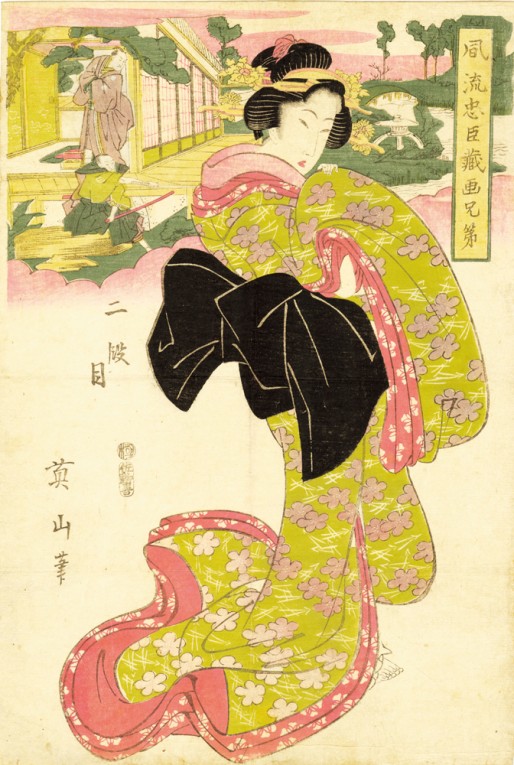
Eizan was a prominent ukiyo-e artist of the late Edo period who focused primarily on beauty. He held a deep interest in the commoner culture of Edo and the daily lives of women, portraying them in traditional attire with a refined and orderly touch.
The defining characteristics of Eizan’s work are his soft, flowing line work and a subdued color palette. His depiction of faces and limbs feels natural, conveying the dignity and inner tranquility of women through subtle shifts in expression and posture. His compositions often feature simplified backgrounds and accessories, a technique that allows the presence and beauty of the figures themselves to stand out.
Furthermore, Eizan meticulously rendered details such as kimono patterns, hairstyles, and personal effects, capturing the delicate charm of Edo’s female population. A calm atmosphere permeates his work, leaving the viewer with a sense of serenity and elegance. Eizan’s bijin-ga prize a natural and composed feminine expression over mere flamboyance; his works became widely loved for their quiet portrayal of the feminine beauty nurtured within the vibrant commoner culture of Edo.
The defining characteristics of Eizan’s work are his soft, flowing line work and a subdued color palette. His depiction of faces and limbs feels natural, conveying the dignity and inner tranquility of women through subtle shifts in expression and posture. His compositions often feature simplified backgrounds and accessories, a technique that allows the presence and beauty of the figures themselves to stand out.
Furthermore, Eizan meticulously rendered details such as kimono patterns, hairstyles, and personal effects, capturing the delicate charm of Edo’s female population. A calm atmosphere permeates his work, leaving the viewer with a sense of serenity and elegance. Eizan’s bijin-ga prize a natural and composed feminine expression over mere flamboyance; his works became widely loved for their quiet portrayal of the feminine beauty nurtured within the vibrant commoner culture of Edo.